




A golf cart flooded route closure should prevent entry, give dispatch a clear status and tell passengers what service is actually available. Do not drive through floodwater to find out whether a shortcut remains usable. Close the affected movement under the site emergency arrangements and use only an alternative that has been appropriately assessed and authorized.
This guide concerns private-site shuttle coordination before, during and after a flood-related closure. It provides no safe wading depth, recovery method or permission to approach dangerous water. Follow local emergency instructions and the vehicle manufacturer’s guidance; protecting people takes priority over preserving the timetable.
Prepare the closure decision before water reaches the route
Identify route sections that may be affected, the responsible decision-maker and the communication channels used by drivers, reception and dispatch. Establish how the site receives official local alerts and who checks that operational staff have received a material change.
The U.S. National Weather Service’s before-a-flood guidance emphasizes preparation, communication and awareness of places where water can collect. Apply the planning principle to your operation while using the appropriate local authority and warning service for the site’s actual location.
Keep the flood response connected with the dispatch communication protocol. Name the route or segment consistently, including both directions and any linked stops. A message that says only “the lower road is bad” leaves too much room for a driver to choose the wrong approach.
Do not use vehicle movement as a flood assessment
When flooding affects or threatens the intended movement, follow the site’s closure and emergency procedure. Observations should come from safe locations and appropriate official information. Drivers should not enter water to measure it, inspect a submerged surface or demonstrate that another vehicle crossed.
The NWS flooded-road safety guidance explains that water can conceal roadway damage and that driving around closure barriers is dangerous. Its examples are public safety messages, not a calculation of a golf cart’s tolerance. No number in that source should become a cart operating limit.
Do not infer suitability from tire size, ground clearance, battery chemistry or a roof. A MOVIVEX catalogue description does not authorize floodwater operation. If a cart has been exposed or disabled, obtain appropriate emergency and professional support rather than attempting an improvised crossing or recovery.

Make the closure visible to every allocation decision
Record the affected segment, time, reporting source, restriction and responsible owner. Tell dispatch which stops or movements are unavailable. Where the site procedure calls for physical closure measures, only responsible personnel should implement them from a safe position without entering the affected area.
The NWS during-a-flood guidance reinforces monitoring official information, avoiding floodwater and following evacuation instructions. A fleet closure plan must remain subordinate to those emergency directions. It should never keep staff at a post that authorities require them to leave.
| Closure message | What staff need to know | Owner to identify |
|---|---|---|
| Affected movement | Named segment, direction and stops | Dispatch lead |
| Current status | Closed; no unapproved entry or crossing | Site operations authority |
| Available service | Confirmed alternative or suspended service | Shuttle supervisor |
| Passenger information | Where updates and assistance are available | Reception or service desk |
| Next decision | Who reviews conditions and issues a status change | Named reopening authority |
The table is an illustrative communication record. Actual emergency arrangements determine who acts and how. Require the relevant acknowledgement so a closure does not remain in a supervisor’s message history while dispatch continues assigning the route.
Offer an alternative only after confirming it is suitable
An alternative can be a different approved route, another appropriate transport arrangement or a temporary suspension with clear passenger assistance. A line drawn around the wet section is not an assessed detour. Consider access permissions, current conditions, pedestrian interfaces and the vehicle’s documented operating limits.
Use the temporary detour process to coordinate an available alternative. Confirm its status separately; nearby routes may be affected by the same weather. Do not send a cart into an unfamiliar area simply because the normal route is closed.
Review the revised stops and passenger journey using your boarding arrangement. Tell passengers about the actual service change without promising a restart time that has not been authorized. Make arrangements for people whose needs cannot be met by the proposed alternative.
Distinguish weather alerts from route permission
The NWS watch and warning explanation distinguishes preparation messages from events that are imminent or occurring. These are U.S. warning terms. Learn the terminology of your own official service and document how it feeds the site’s decision process.
An alert ending does not by itself reopen a private route. Equally, a route may need closure before a broad regional warning is issued if local conditions warrant it. Keep responsibility for the actual route decision explicit and consistent with emergency instructions.
Record the source and time of each material update. During a shift change, carry the current restriction into the handover record. Avoid changing a closure to “probably open” because no new message has arrived.

Reopen through an assessment, not a trial crossing
Receding water can leave damaged surfaces, debris and other hazards. The NWS after-a-flood guidance explains that dangers can remain even when the immediate event has passed. Keep the relevant closure until responsible personnel have the information needed for the authorized decision.
Arrange competent assessment of affected infrastructure and equipment as appropriate. If route damage is found, connect it to the surface defect and repair process. A driver should not be asked to prove the road is sound by crossing it.
Issue a clear reopening message identifying the segment, time, authority and any remaining restrictions. Confirm that signs, dispatch information and passenger notices agree. Retain the closure and reopening record so later reviews can distinguish the weather event from the actual operating decisions.
Review the information chain after the event
Once the immediate response is over, ask whether each driver received the closure before their next allocation and whether reception gave passengers consistent information. Review missed acknowledgements and conflicting route names as process problems. A record of messages sent is useful, but does not prove that the right people understood the instruction.
Keep the review factual. Distinguish an observed closure time from a reported estimate and identify information that remains unknown. Use the findings to improve contact lists, shift briefings and alternative-service arrangements before the next event, without treating an uneventful crossing elsewhere as validation of floodwater driving.
Frequently asked questions
How deep can water be before a golf cart must stop?
This article provides no wading limit. Do not enter floodwater. Public safety examples about cars or trucks do not establish safe operating conditions for a golf cart.
Can we follow another vehicle that has crossed?
No crossing by another vehicle establishes route permission or safety. Conditions and hidden damage can differ or change. Follow the closure and emergency instructions rather than using another driver’s decision as evidence.
Does a lifted cart make the flooded route usable?
Do not make that assumption. A configuration feature does not resolve water movement, concealed surface damage or the safety of people. Route closure decisions require the appropriate site and emergency process.
What information should we request for fleet planning?
Ask MOVIVEX for the applicable operating documentation for the proposed configuration through fleet planning. Use it within a broader site plan that includes closure and alternative-service arrangements, rather than planning to operate through flooding.
Related video: avoiding flooded roads and paths
This National Weather Service public safety video reinforces avoiding flooded roads and paths. Its vehicle and water-depth examples are not operating limits for a golf cart. Follow local emergency directions and keep the affected route closed under the approved site process.
Third-party educational video by National Weather Service (NWS). Watch on YouTube
Explore related MOVIVEX golf carts
Use these existing catalogue vehicles as starting points for a configuration discussion. Confirm the ordered specification and support scope in writing.
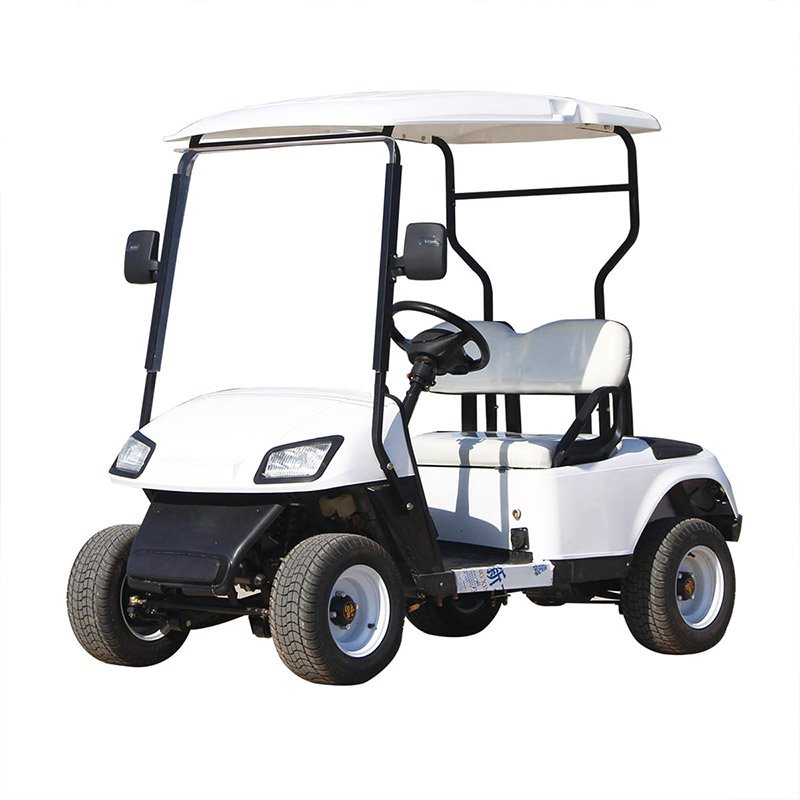
MV-A2 · Catalogue configuration
Carro de golf eléctrico MV-A2
Request applicable operating documentation; this catalogue cart is not presented as suitable for floodwater.
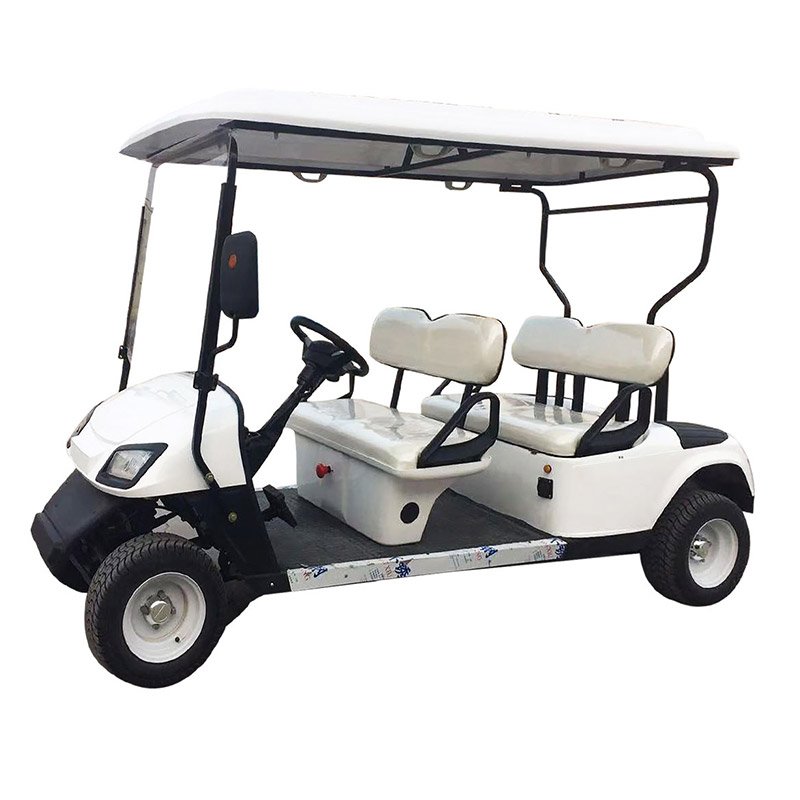
MV-A4 · Catalogue configuration
Carro de golf MV-A4 de 4 plazas
Request applicable operating documentation; this catalogue cart is not presented as suitable for floodwater.
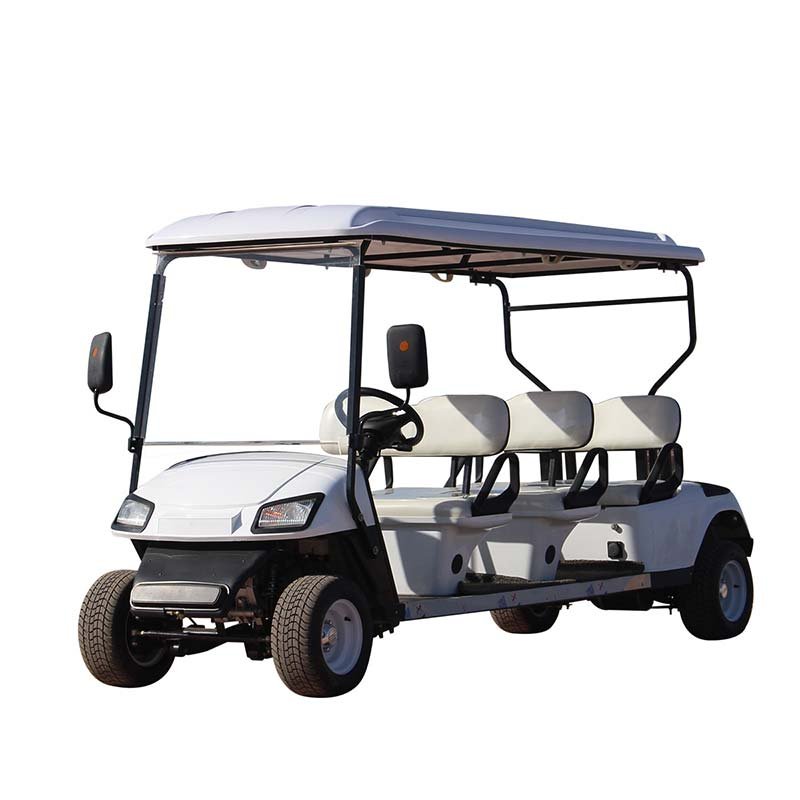
MV-A6 · Catalogue configuration
Carro de golf MV-A6 de 6 plazas
Request applicable operating documentation; this catalogue cart is not presented as suitable for floodwater.
Discuss your fleet requirements
Tell us your passenger needs, quantity, operating location and delivery destination.

