




A commercial golf cart fleet cleaning plan should tell staff what areas they may clean, which approved materials and methods apply, who owns the task and how defects are reported. Start with the exact vehicle instructions and the materials fitted to the ordered configuration. Then build a practical roster around observed use. A cleaning checklist should support a tidy, serviceable fleet without becoming an improvised electrical maintenance procedure.
This guide concerns organizing the work. It does not prescribe a universal cleaning chemical, water pressure, disinfection claim or electrical isolation procedure. Confirm the applicable instructions with the supplier before adopting a method. Connect the plan to your fleet operating brief and the actual conditions at your resort, course or campus.
Divide the vehicle into understandable work areas
List the passenger area, exterior body, glazing, floor surfaces and any equipment requiring separate instructions. The purpose is to make responsibilities clear, not to authorize access to enclosed electrical components. Mark restricted areas and specialist tasks explicitly so a staff member does not interpret an incomplete checklist as permission to clean everything the same way.
Record the materials and accessories fitted to each configuration. Upholstery, glazing, body finishes and optional equipment may need different care instructions. A fleet with several vehicle types should not rely on a single product label or a photograph to determine compatibility. Obtain the relevant documentation for the ordered equipment.
Keep the checklist organized around observable tasks. “Passenger area checked and cleaned using the approved method” can be linked to a specific instruction. “Vehicle disinfected” is a broader claim that needs a validated procedure and applicable product use; do not include it merely because a surface appears clean.

Approve materials before placing them on the work counter
Create a controlled list of permitted products and methods from the applicable vehicle and product instructions. Record the document reference, the area of use and any limitations. If compatibility has not been confirmed, keep the item off the approved list rather than asking staff to experiment on a vehicle in daily service.
Where a cleaning product is used, staff need access to its current instructions and safety information. As a Canadian workplace reference, CCOHS cleaning products guidance provides relevant workplace context. Requirements vary by jurisdiction and product; this reference is not a legal determination for a fleet in another country.
Do not introduce dilution ratios, contact times or protective equipment requirements from a different product into the roster. The CCOHS safety data sheet guidance explains the role of product safety information. Use the actual documentation and an appropriate local review to establish the procedure, rather than deriving it from a generic article.
Match frequency to actual fleet use
Observe where cleaning needs arise: repeated passenger transfers, luggage handling, dusty routes, wet weather or long periods of outdoor parking. Use those observations to assign tasks and review points. Avoid presenting one interval as suitable for every operating environment or as a condition automatically required by the manufacturer.
Separate routine presentation work from issue-driven action. A spill, damaged seat or suspected equipment fault may need an immediate report under the site’s approved process. It should not be deferred merely because the vehicle’s next scheduled cleaning entry is later in the week.
Make the staffing and dispatch constraint visible. A task has to fit within a real return window and be completed under the approved method before the next assignment. If the roster leaves no workable window, change the planning arrangement rather than quietly skipping steps or releasing a vehicle without the required review.
| Planning item | Record to maintain | Reason |
|---|---|---|
| Vehicle or group | Identifiers and applicable configuration | Avoid assigning the wrong instruction |
| Work area | Approved scope and restricted areas | Keep cleaning separate from specialist work |
| Material and method | Current approved document reference | Prevent unconfirmed substitutions |
| Task owner | Named role and handoff point | Make completion accountable |
| Issue and release | Observation, escalation and authorized decision | Keep defects visible before dispatch |
This table is an illustrative administrative layout. It contains no universal cleaning interval or technical setting. Replace the headings where your actual fleet process needs more detail, but retain the link between the task, its approved instruction and the person responsible for its completion.
Make the checklist easy to complete honestly
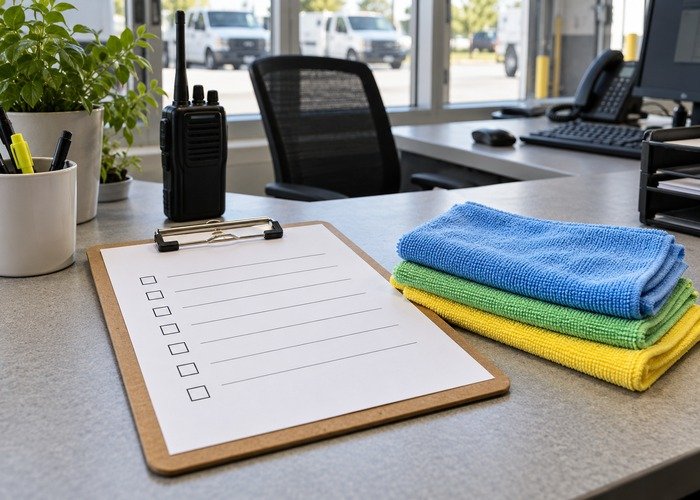
Use separate answers for completed, not completed, not applicable and issue reported. A single tick should not represent both “no cleaning needed” and “cleaning finished.” Add a field for the reason when a task cannot be completed, including unavailable materials or a vehicle that requires an authorized assessment.
Fleetio’s inspection form documentation provides general context for structured checklist items. The fleet can use paper or another system; the important point is that the record identifies the vehicle, time and person and makes exceptions visible.
Keep observations factual. Record a torn seat cover, loose visible trim or an unusual odor without assigning an unsupported technical cause. Cleaning staff should report defects through the fleet service log and the site’s issue process, rather than attempting repairs outside their authorized work.
Keep defect reporting separate from presentation
A clean appearance does not establish mechanical or electrical condition. If an issue is found, create a separate reference and identify who decides the next step. A completed cleaning task should not silently close a service issue or replace the applicable return-to-service assessment.
Where photographs are helpful, tie them to the vehicle identifier and observation date. Avoid a shared folder of unlabeled close-ups that cannot be connected to a specific unit. Fleetio’s inspection reporting documentation provides administrative context for separating submissions and reported failures.
Preserve the reader’s distinction between cleaning completion and dispatch authorization. The person checking the roster should see whether the vehicle is awaiting review, unavailable or released under the approved process. Do not use an attractive photograph or an unchecked status label as evidence that a reported defect has been resolved.
Related video: golf cart cleaning at a resort
This resort video illustrates how golf cart cleaning work is organized. Its methods and product choices are not approval for your vehicle; use the exact supplied manuals and locally approved procedure, without assuming a health outcome.
Third-party educational video by Mission Resort + Club. Watch on YouTube
Review supplies and handoffs across shifts
Assign someone to maintain the approved materials list and remove obsolete instructions from the work area. If the fleet changes upholstery, glazing or an accessory, ask whether the care instructions need to change. Update the relevant record rather than assuming that the previous method remains suitable.
Review recurring exceptions with the team: tasks missed because vehicles returned late, records without identifiers or supplies substituted without approval. Fleetio’s reporting overview illustrates reviewing vehicle and issue information together. A simple weekly exception list can support the same discussion without requiring new software.
Use actual observations to improve the roster. Do not claim that a new cleaning plan has extended battery life, prevented illness or reduced maintenance costs unless you have appropriate evidence. The immediate result should be a clearer work assignment, documented completion and a reliable route for reporting defects.
Ask the right questions when selecting vehicles
When reviewing MOVIVEX catalogue configurations, ask which care instructions accompany the exact passenger surfaces, body materials and accessories in the proposed order. Product thumbnails can support a configuration discussion, but they do not establish chemical compatibility or cleaning requirements.
Connect those questions to your configuration brief. A fleet handling frequent passenger transfers may need a different work roster from one used occasionally on a private course. Describe your environment and work windows when you request a quotation, and ask for the relevant manuals before finalizing the operating plan.
Frequently asked questions
Can one cleaning method be used for every golf cart?
Do not assume that. Confirm the instructions for the actual materials and equipment in each ordered configuration, including optional accessories and restricted areas.
Should cleaning staff open electrical compartments?
A general cleaning roster does not authorize specialist work. Follow the exact vehicle instructions and the site’s approved roles; escalate questions rather than improvising access or methods.
Does a completed checklist mean a cart is ready for service?
Only if the applicable release process has also been satisfied. Cleaning completion and the resolution of reported defects are separate records and decisions.
What should a first fleet cleaning plan contain?
List the vehicle group, work areas, approved instructions, task owners, planned windows and issue handoff. Add frequency after reviewing actual use and the applicable documentation.
Explore related MOVIVEX golf carts
Use these existing catalogue vehicles as starting points for a configuration discussion. Confirm the ordered specification and support scope in writing.

MV-A4 · Catalogue configuration
MV-A4 4 Seater Golf Cart
Discuss passenger materials and the care documentation supplied with this configuration.

MV-C2+2 · Catalogue configuration
MV-C2+2 4 Seater Golf Carts
Discuss passenger materials and the care documentation supplied with this configuration.

MV-D2+2 · Catalogue configuration
MV-D2+2 Chinese Golf Carts
Discuss passenger materials and the care documentation supplied with this configuration.
Discuss your fleet requirements
Tell us your passenger needs, quantity, operating location and delivery destination.