
















































A golf cart canopy and gate clearance check should identify which exact vehicles may use each restricted route. Obtain the actual vehicle envelope, have the site openings measured competently, and record a reviewed decision for each vehicle-and-route combination. Do not approve passage from a catalogue photograph or by comparing two approximate height figures.
For commercial buyers, the useful output is a clearance matrix linked to the ordered configuration and the current property layout. It should show approved combinations, restrictions and unresolved questions before a shuttle assignment is made. This article organizes that information; it does not provide an engineering clearance allowance or authorize a trial through a doubtful opening.
Start with the vehicle that will actually arrive
Identify the model, build configuration and fitted accessories. A canopy, mirror, enclosure or other approved addition can change the information needed for the review. Ask the supplier for applicable dimensional information and the conditions under which those dimensions are stated. Keep the response with the fleet configuration brief.
Do not assume two vehicles in the same seating class have the same envelope. Nor should a dimension for a different canopy or wheel arrangement stand in for the supplied build. When the configuration is unsettled, record that uncertainty rather than issuing an apparently final route approval.
HSE’s vehicles and loads guidance asks planners to consider vehicle dimensions and route restrictions. This is general UK workplace transport context. It does not give MOVIVEX dimensions, a cart-specific clearance margin or permission to use a public road.

Inventory openings, not just the main entrance
Walk the intended service route with the responsible site team and identify every location requiring a clearance review. Include entrances, covered pickup areas, service passages, storage access and gates used on alternative routes. A spacious main driveway does not establish that the cart can reach its overnight parking position.
Give each location a stable identifier and record the direction of travel, approach conditions and configuration of the opening. A gate leaf, suspended fitting or temporary decoration can make the effective opening different from the masonry dimensions shown on an old drawing.
HSE’s traffic-route guidance identifies gates, barriers and other route hazards as matters for assessment. Use that as a prompt for a complete inventory, without transferring truck dimensions, gradients or operating practices to an electric golf cart.
Commission a competent site measurement
Ask the appropriate competent person to establish the relevant dimensions and approach constraints using a safe method. Keep the measurement date, location, method and limitations with the record. This article does not prescribe measuring from a moving vehicle, working at height or entering an unsafe survey position.
The review should consider the actual path through the opening, including surface profile and nearby obstructions, rather than one convenient point. Request clarification where a drawing omits lighting, services or a changed surface. Do not turn a missing measurement into a driver instruction to “take it slowly and see.”
HSE’s height-restriction factsheet discusses identifying restricted structures and the effect of approach geometry. Its numerical examples relate to broader UK road and goods-vehicle contexts. They are not a clearance design rule for a private golf cart route, and no numerical allowance is adopted here.
| Matrix field | Evidence needed | Decision to retain |
|---|---|---|
| Vehicle reference | Exact build and relevant accessory information | Configuration assessed |
| Opening reference | Current measured conditions and approach | Location and direction covered |
| Technical review | Competent assessment with stated limitations | Approved, restricted or unresolved |
| Operational instruction | Route assignment and restriction communication | Who may dispatch which vehicle |
| Change trigger | Vehicle or site alteration report | When the decision must be reviewed |
Separate measurement from approval
A measurement is evidence, not the final operating decision. Have the responsible reviewer compare the confirmed vehicle information with the site conditions and determine any necessary restrictions. The record should explain the assumptions and identify the person or role responsible for the conclusion. Keep measurement units explicit in both supplier and site records, and have any conversion checked before the information is compared.
A vehicle-route combination can remain unresolved while another combination is approved. That is more informative than a property-wide note saying “golf carts fit.” Use the route acceptance plan for the wider route review, while retaining this matrix as the specific reference for restricted openings.
If the review identifies an unsuitable combination, arrange an approved alternative route or a suitable different vehicle. Do not ask the driver to remove equipment, fold an accessory or modify the canopy unless that arrangement is explicitly covered by applicable instructions and approval.

Make the restriction visible before commitment
Drivers need to know about a restriction before they enter a position with no appropriate alternative. Coordinate the route instruction with dispatch, reception and the people responsible for gates. A warning discovered at the obstruction may leave the driver facing an unnecessary manoeuvre.
HSE’s safe-workplace guidance discusses advance warning of height restrictions and suitable route layout. Use the general principle in a competent site review; sign design, placement and any physical restriction equipment need their own applicable assessment.
Link the approved location names and restrictions to the route signs and markings register. Avoid different names for the same canopy across the map, dispatch sheet and maintenance request. A driver should be able to match the instruction to the actual place.
Recheck after changes to the vehicle or property
Changes may originate in different departments. Procurement might accept a different canopy, facilities might alter a gate, or an event team might add decorations. Identify who tells the clearance-record owner before the altered arrangement enters service.
HSE’s communication guidance provides general context for sharing changed working information. Turn that into a review trigger and an updated dispatch instruction. The page’s UK legal context is not presented as a universal property-management rule.
An illustrative example is a covered pickup point whose suspended lighting has been changed. The earlier measurement remains historical evidence, but it does not prove the new condition is suitable. Hold the affected vehicle-route decision until the responsible review confirms the current arrangement.
Include clearance questions in the purchase discussion
When reviewing the MOVIVEX catalogue, describe any restricted entrances and request dimensional information for the actual proposed configuration. Make clear whether the assessment includes optional accessories. Do not treat a requested dimension as confirmation that the entire route has been approved.
Retain the accepted configuration and any site-dependent questions in the order record. If a change is proposed later, use configuration change control to identify affected clearance decisions. Product cards below support an enquiry; they do not establish suitability for your gate or canopy.
Frequently asked questions
Is overall height enough to approve a route?
No. The exact configuration, current opening, approach conditions and applicable technical review all matter. A single approximate number does not establish an approved combination.
Can a driver test an uncertain opening?
Do not use a doubtful passage as a substitute for assessment. Keep the combination unresolved and arrange competent review or an approved alternative.
Should every fleet vehicle use the same clearance record?
Only where the record explicitly covers the relevant configurations. Identify differences rather than assuming that similar-looking carts are interchangeable.
When should the matrix be reviewed?
Review it when the assessed vehicle, accessory, opening, approach or surface conditions change, or when new evidence calls an existing decision into question.
Related video: advance height-warning equipment example
This Barrier Group video illustrates a type of advance height-warning equipment. It is a supplier product example, not an engineering clearance assessment or a recommendation for this specific equipment. Its promotional performance claims and product dimensions are not adopted here.
Third-party educational video by Barrier Group. Watch on YouTube
Explore related MOVIVEX golf carts
Use these existing catalogue vehicles as starting points for a configuration discussion. Confirm the ordered specification and support scope in writing.
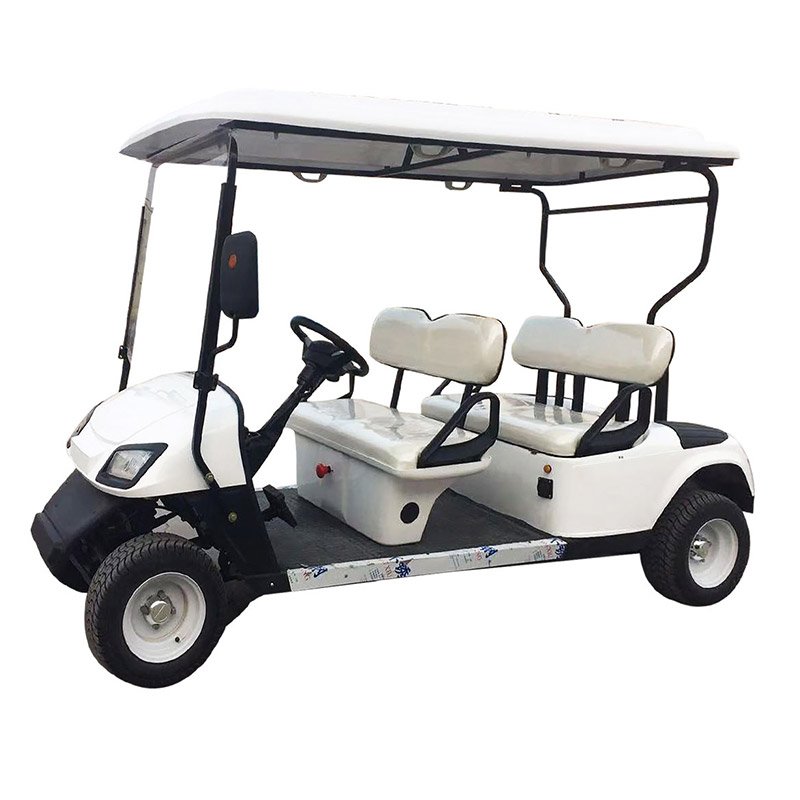
MV-A4 · Catalogue configuration
MV-A4 4 Seater Golf Cart
Request dimensional information for the exact proposed build and accessories.
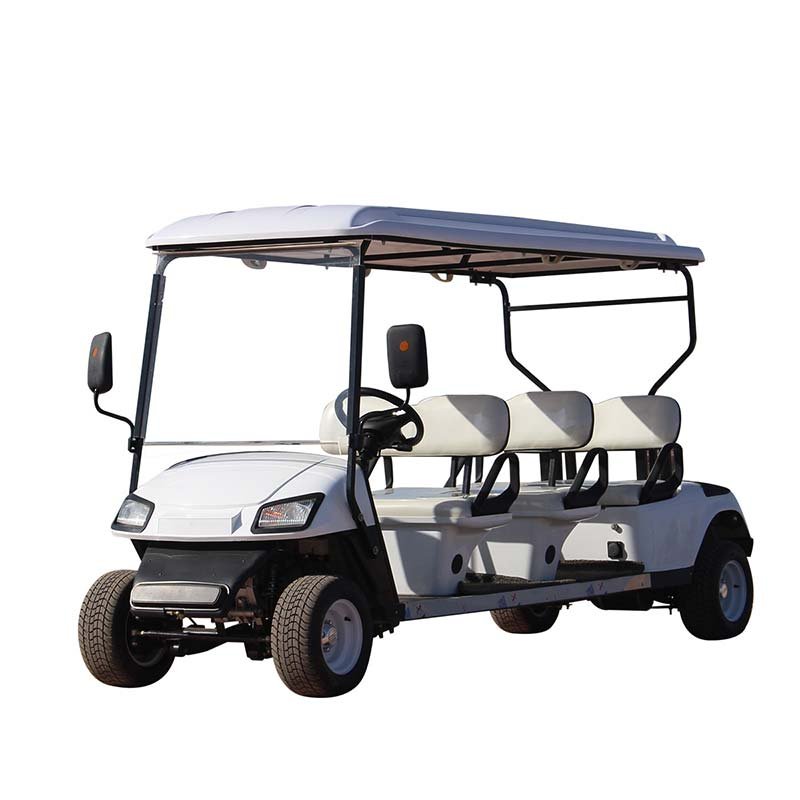
MV-A6 · Catalogue configuration
MV-A6 6 Seater Golf Cart
Request dimensional information for the exact proposed build and accessories.
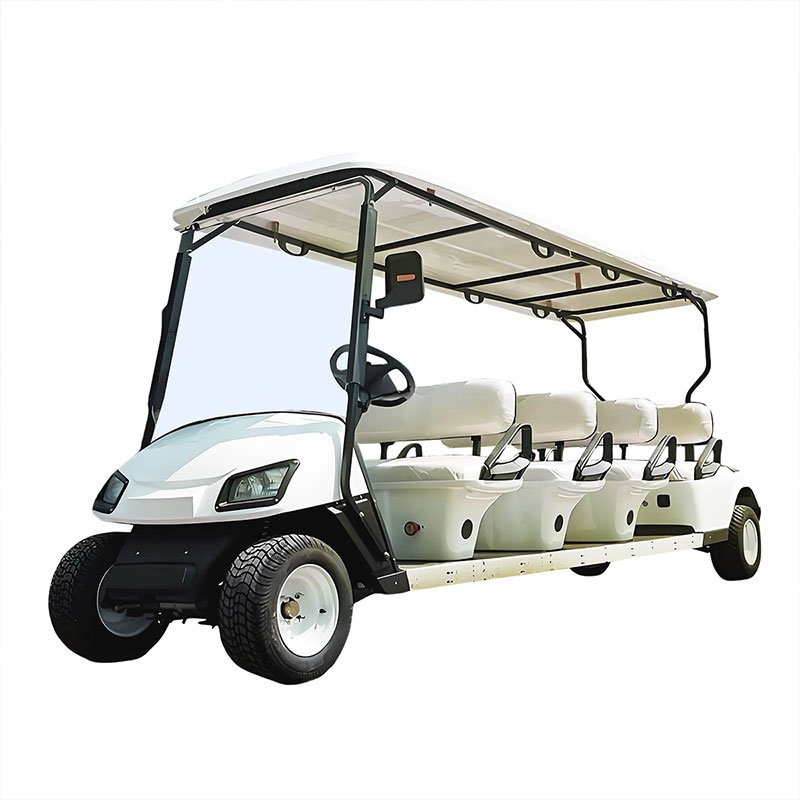
MV-A8 · Catalogue configuration
MV-A8 8 Seat Golf Cart
Request dimensional information for the exact proposed build and accessories.
Discuss your fleet requirements
Tell us your passenger needs, quantity, operating location and delivery destination.

